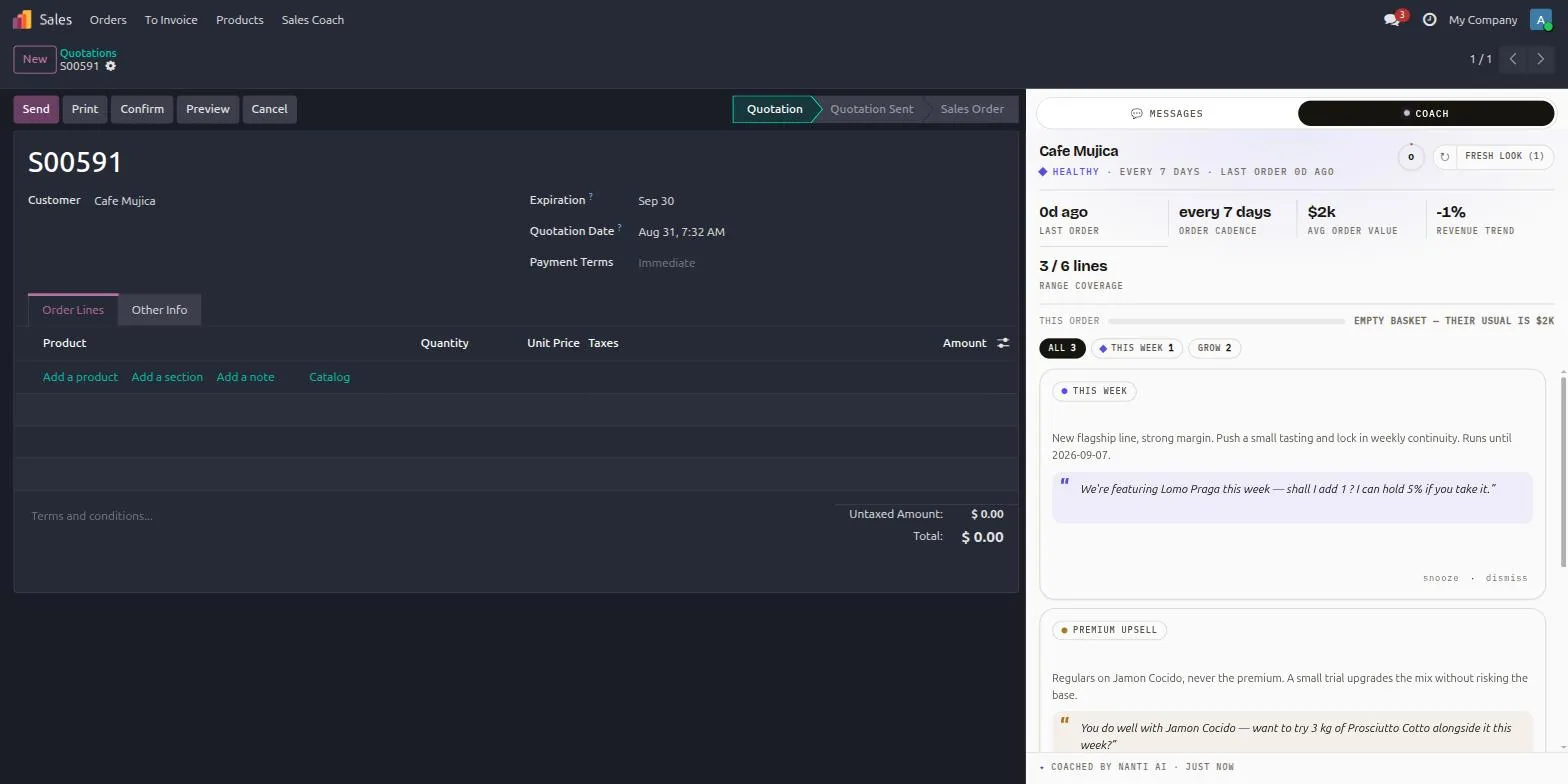
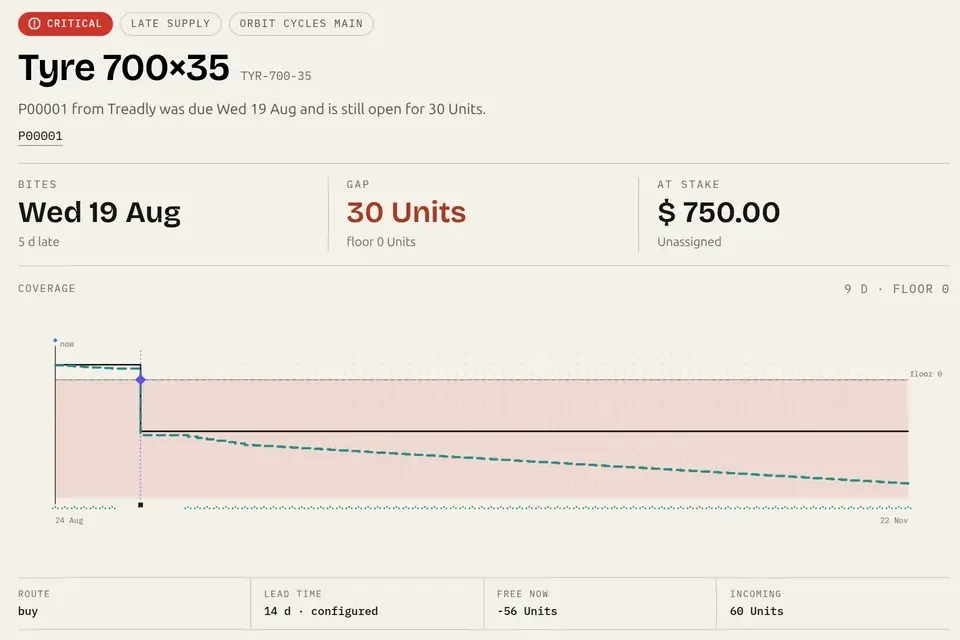
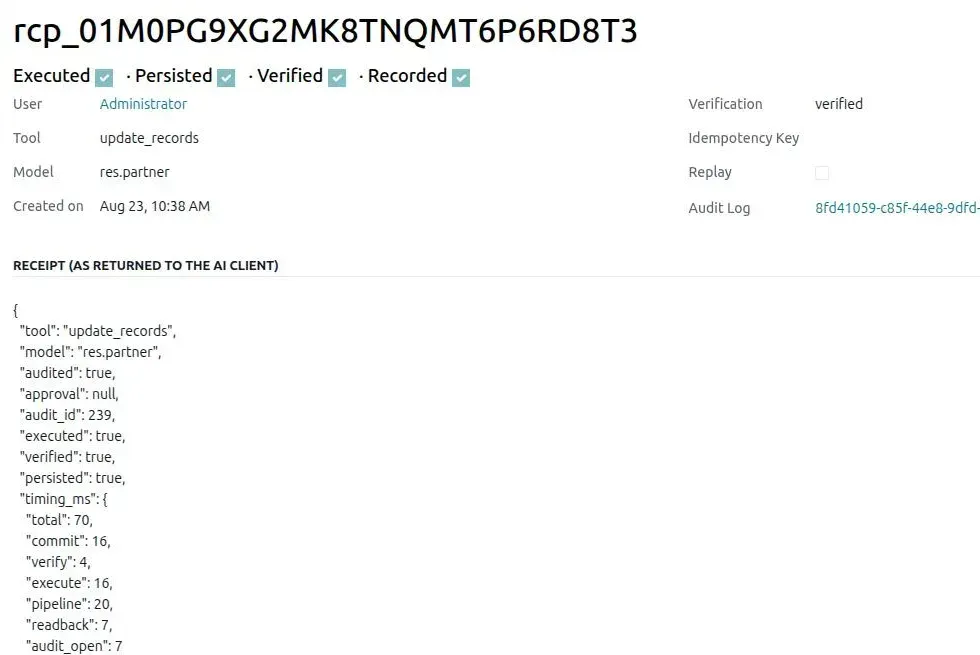
Context Layer for Odoo
Consuming the layer.
The five operations any AI reads the context layer through, and the surfaces that expose them: MCP, REST, Python, TypeScript, static context packs, and signed offline caches. What is implemented today, and how distribution opens.
The context layer is designed to be read the same way regardless of which AI, connector, or transport you use. Everything reduces to five operations.
The five operations
| Operation | What it answers |
|---|---|
get_context | For this question, give me the smallest applicable, verified context pack. |
resolve_noun | What model and record population does this business noun map to? |
explain_field | What does this field actually mean, beyond its label? |
get_join_path | What is the correct typed path from this model to that one? |
validate_write_intent | Is this intended write risky, and what is the safe way to do it? |
get_context is the main entry point; the other four are focused lookups an agent can call
mid-reasoning. validate_write_intent is advisory: it can warn, but it never authorizes an
action and never implies permission. Odoo remains the authority.
Surfaces
The same five operations are exposed through several surfaces, so the layer fits whatever an AI stack already speaks:
- MCP: the operations exposed as tools to an MCP client, served locally.
- REST: the same operations over HTTP, as
POST /v1/<operation>. - Python: a runtime client, plus a public entry-validation API (below).
- TypeScript: a dependency-free client wrapping the REST operations.
- Static context packs: a request-scoped JSON artifact you assemble ahead of time and hand to a model, no live service required.
- Signed offline caches: an entitlement-scoped, signed cache served locally, for air-gapped or offline use.
The reference clients
The public kit’s shapes are stable enough to show. The Python package exposes entry validation:
from ocl_spec import ValidationError, validate_entry
# `document` is your entry; `schema` is the loaded entry JSON Schema.errors = validate_entry(document, schema)
The TypeScript client (OCLClient) wraps the REST operations:
const client = new OCLClient(baseUrl);
await client.getContext(question, scope);await client.resolveNoun(noun, scope);await client.explainField(model, field, scope);await client.getJoinPath(fromModel, toModel, scope);await client.validateWriteIntent(model, operation, scope);
scope carries the Odoo version, edition, and modules, so the layer returns only facts that apply
to the database in question.
Available now vs verified runtime
The open standard is on GitHub, Apache-2.0: clone it, run the CLI, and wire the example MCP
server (get_context, resolve_noun, explain_field) over ten candidate example entries
today. See the Quickstart. The verified 171-entry runtime is
live at api.context.nanti.ai and answers all five operations over authenticated REST or remote
MCP. It is self-serve on a free 7-day trial: try one decision with no login at
the demo, then
start a free 7-day trial and follow
Use the live runtime for the connect commands. The hosted
runtime never touches your Odoo database; your own connector reads records under your real
permissions. The TypeScript client ships in the repo as the contract; it is not on npm yet,
pending a stable endpoint.
Choosing a surface
- Building an agent or assistant? Wire the example MCP server now (see the
Quickstart), or use REST and call
get_contextper question against the verified runtime. - Working in Python? Validate your own entries today with
ocl_spec; the same package ships anOCLClientyou point at the runtime with a trial token. See Use the live runtime. - Need offline or air-gapped? Use a static context pack or a signed offline cache. See Context packs and offline.
The format the operations speak is public and specified. See The open format.